


Rich nations struggle with rising debt burdens
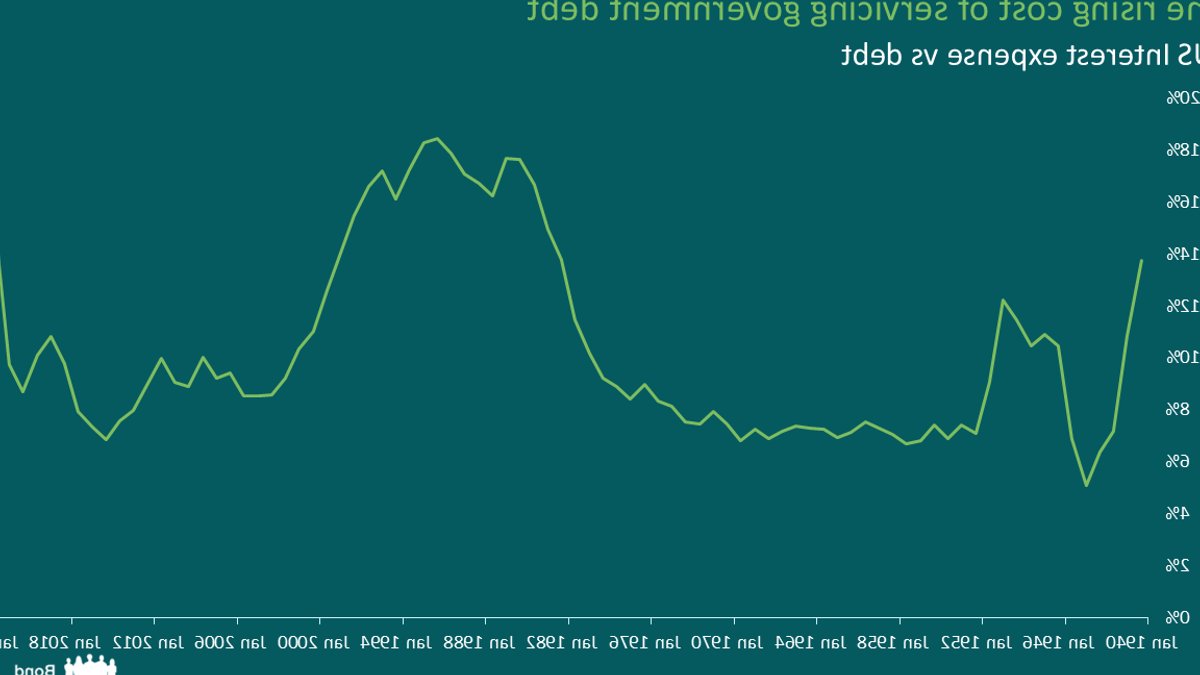
Federal Reserve Economic Data shows developed economies now allocate growing portions of tax income to debt servicing. The prolonged stretch of climbing debt paired with minimal interest expenses seems to be concluding. During the past half-century, debt relative to GDP has surged continuously, even as real interest rates typically declined.
The link between soaring public debt and stubbornly high real rates is probably not a coincidence; history shows that heavily indebted states and raised real interest costs seldom survive together for an extended period. Nations possess only a few policy levers to address mounting liabilities: cut the real price of credit, spur growth, hike taxes, or curb expenditures.
Dealing with Rising Debt Burdens
The initial three measures are growing harder to employ, as aging societies limit expansion, tax loads are already substantial throughout much of Europe, and cutting spending enjoys little political support anywhere. This leaves a fourth path: keep borrowing costs beneath nominal GDP growth for a sufficient span so that debt becomes tractable, a strategy known as financial repression.
In past episodes, financial repression has typically combined modest inflation with interest rates set below the levels a free market would dictate. This arrangement gradually shifts wealth from lenders to borrowers because the debt’s real value shrinks over time. Governments are the world’s largest debtors.
Financial Repression and Its Challenges
Pursuing financial repression is not without drawbacks; any nation that tries to push real rates down on its own may encounter a weaker currency, imported price pressures, and capital flight. Markets tend to penalize the most vulnerable link, and this route can carry serious repercussions for the domestic economy.
Read Also: European Gas Prices Surge, Sparking New Crisis Fears
Nevertheless, the current debt issue is not limited to one state, as large portions of Europe carry heavy liabilities. The motivations are strikingly alike across advanced economies, suggesting an intriguing scenario: instead of a single country acting alone, it is more plausible that many will head in the same direction at roughly the same moment.
When several nations adopt financial repression together, the way the adjustment works changes. Rather than one currency sharply depreciating against another, all monies slowly lose purchasing power in unison. The loss of value shows up not in foreign-exchange rates but against real assets such as gold, commodities, energy and infrastructure.
In such a context, policymakers could accept a modest amount of inflation because no single currency would suffer a chaotic collapse. Instead, the purchasing power of money slowly erodes across the developed world. That may ultimately prove to be the most politically acceptable solution to excessive debt burdens.
Overall, the data suggest a clear implication: the advanced economies might struggle to maintain today’s real interest rates when debt ratios surpass 100% of GDP. If that proves unmanageable, decision-makers will eventually have to pick between fiscal tightening, higher taxes, or some variant of financial repression that drives real borrowing costs down.
For investors, that points towards assets that benefit from declining real yields and the erosion of fiat purchasing power. Gold and Commodities have already moved meaningfully higher, yet TIPS are trading at the most attractive level in many years. The big macro question we must ask ourselves is: ‘Are current interest rates sustainable given debt levels?’

Australian Housing Boom Faces Rising Debt, Rate Pressures


