


European Gas Prices Surge, Sparking New Crisis Fears
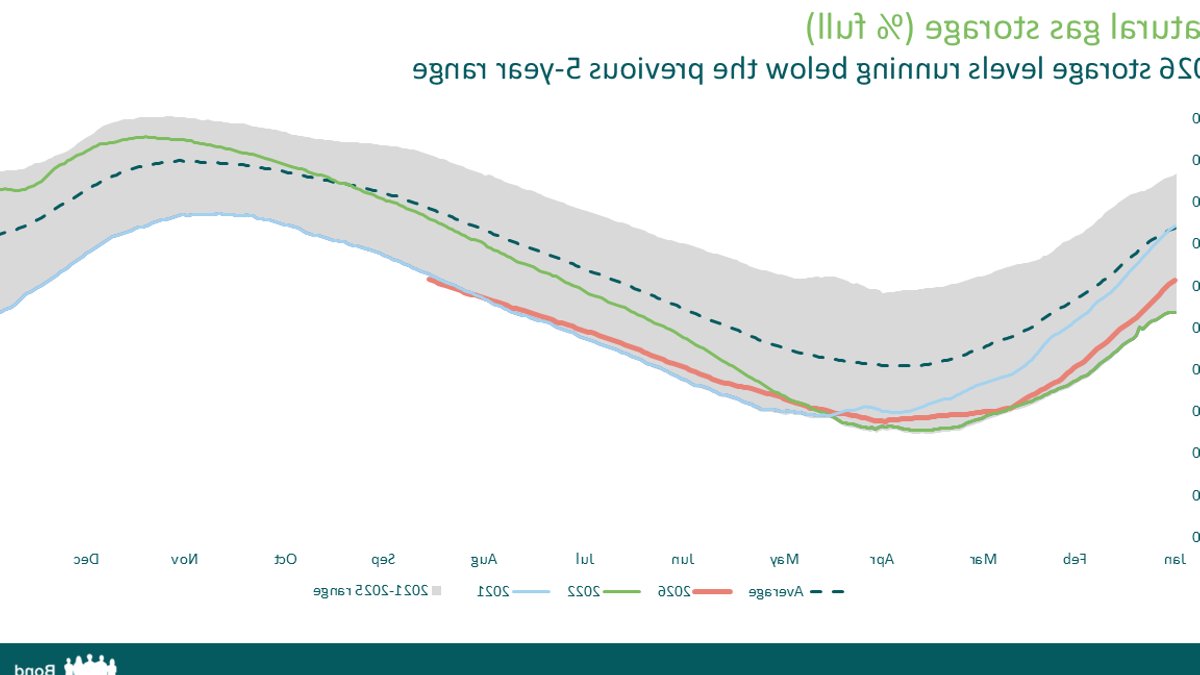
European natural gas prices are climbing again, and storage levels are lower than expected. This has sparked concerns about a potential new energy crisis, reminiscent of the challenges faced in 2022. The situation raises questions about its impact on the European Central Bank’s (ECB) policy outlook, particularly regarding inflation and monetary decisions.
The Role of Natural Gas in European Inflation
A recent analysis from RBC European Macro Strategy suggests that Europe might be shifting from an oil shock to a natural gas shock. This transition could significantly influence inflation and monetary policy. The report highlights that European gas storage levels are at approximately 60%, lower than the historical August average of around 75%. This, combined with reduced liquefied natural gas (LNG) imports and increased competition from Asia, paints a complex picture.
Natural gas plays a more critical role in European inflation compared to oil. Its influence extends to electricity prices, industrial production costs, and household utility bills. Therefore, a sustained increase in gas prices is likely to have a broader impact on inflation, a concern for ECB policymakers.
Read Also: European banks post higher, more consistent returns
Changing Trends in Europe’s Gas Demand
Comparing current storage levels to previous years is challenging due to fundamental changes in Europe’s gas demand. Before the energy crisis, the EU consumed approximately 400-420 billion cubic meters of natural gas annually. Today, consumption has dropped to around 320-340 billion cubic meters—a structural adjustment rather than a cyclical fluctuation.
This reduction is attributed to various factors. Industrial consumption has decreased as energy-intensive sectors have either closed, relocated, or improved efficiency. Residential demand has also declined due to investments in insulation, heat pumps, and conservation measures. Additionally, the expansion of renewable energy generation has lessened the reliance on gas for electricity production.
Europe’s Enhanced Resilience and Operational Preparedness
Europe’s resilience in the face of these challenges is partly due to demand destruction. Some industrial activities have significantly scaled down, altering the continent’s industrial environment. While this raises competitiveness concerns, it has reduced vulnerability from a gas security perspective.
Read Also: Korea’s Strong Fundamentals Clash With Weak Pricing
Europe has also bolstered its operational preparedness. Governments have gained experience in managing energy shortages, and utilities have enhanced their hedging programs. Emergency planning frameworks are more robust, and renewable capacity has grown rapidly. French nuclear output, which faced disruptions in 2022 and 2023, has largely recovered. These developments collectively mean Europe now requires less gas to sustain its economic activities compared to just a few years ago.
Implications for Bond Investors and the ECB’s Policy
For bond investors, the critical question is whether gas prices will rise enough to significantly alter the inflation outlook and expectations. The ECB’s current focus is on domestically generated inflation, wage growth, and services prices. While external supply shocks are theoretically manageable, the recent post-pandemic inflation cycle remains a fresh concern.

European banks post higher, more consistent returns


