


Bangladesh’s GDP growth overstated by flawed manufacturing data
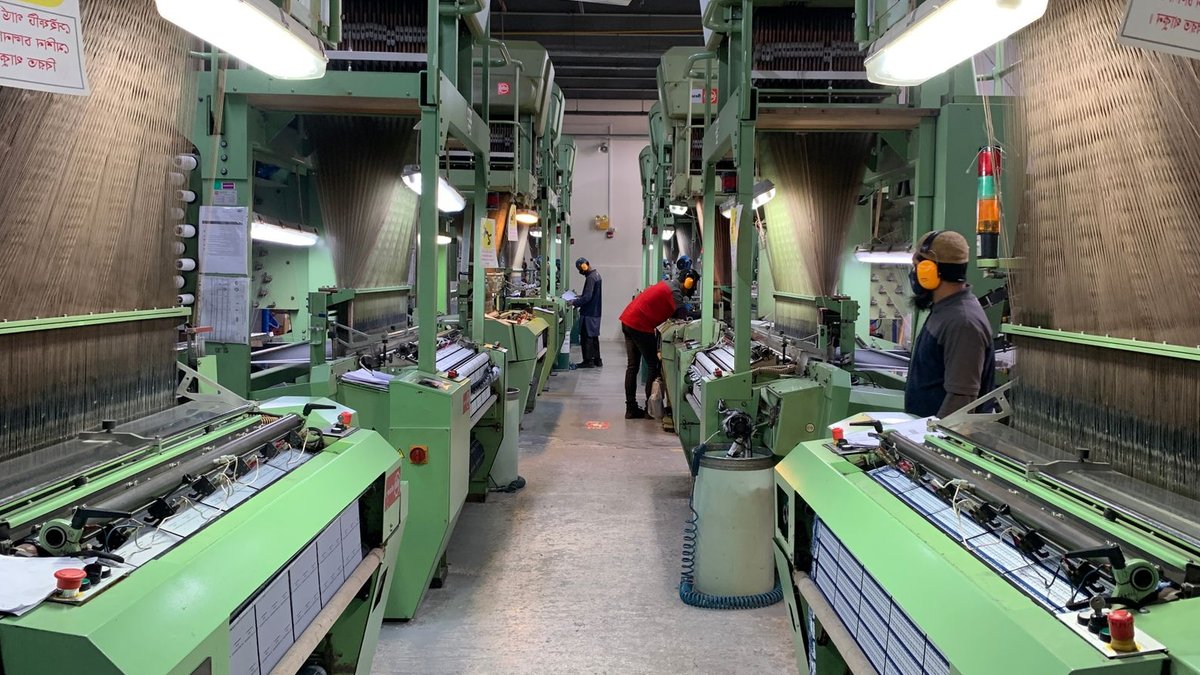
A committee of experts has concluded that Bangladesh’s reported manufacturing sector growth between 2011 and 2019 was artificially inflated by exaggerated figures in cement and shipbuilding, which skewed the country’s GDP calculations. Led by Dr. AK Enamul Haque and Dr. Atanu Rabbani, their analysis showed manufacturing contributed 41% to the 1.12 percentage point rise in GDP growth during that period—lifting average annual growth from 6.27% in FY11–FY14 to 7.39% in FY15–FY19. The findings were presented at a seminar on November 14 at the Bangladesh Bureau of Statistics (BBS), where officials invited feedback on the draft report, which seeks to correct national economic data inaccuracies.
Medium and large enterprises were the primary drivers, accounting for 0.3666 percentage points—nearly 79% of the manufacturing sector’s total impact. Their share of national GDP increased from 15.16% to 18.25%, while small industries saw average growth climb from 6.85% to 9.52%, though their overall contribution remained limited. The report identified three consecutive years of abnormal growth in cement, 61.6%, 51.7%, and 45.9%, stemming from miscalculations in value addition from imported clinker and inventory adjustments. Shipbuilding figures were even more distorted, with a 242.4% spike in FY2014–15 and a 97.6% increase the following year, likely due to counting a single large order or treating one facility’s output as representative of the entire subsector.
While the readymade garment (RMG) sector, Bangladesh’s largest manufacturing industry, slowed from 13.55% to 8.69%, 16 of 22 subsectors recorded sharp increases. Non-metallic minerals, including cement and bricks, surged from 2.32% to 25.67%, and textile production rose from near stagnation (0.05%) to 8.14%. Machinery, electronics, and small transport equipment also showed dramatic jumps, raising concerns about whether these reflected real production or data collection flaws.
Read Also: Islami Bank seeks government investment
Data collection relied on too few sources
The report exposed a critical weakness: estimates for some sectors depended on data from just one or two establishments. For example, petroleum refining showed an 87.4% growth spike in FY2015–16 followed by a 50.3% contraction the next year, both based solely on Eastern Refinery’s figures. Such narrow reliance distorts the broader industrial picture, the committee warned.
Finance and Planning Adviser Rashed Al Mahmud Titumir accused officials of fabricating data from seven sectors using secondary sources to inflate GDP growth by 0.8 to 1.13 percentage points starting in FY2014–15. He noted that administrative and secondary data sources are more susceptible to manipulation than BBS field surveys, particularly in non-RMG industries where transparency is lower. The review, conducted by the Bangladesh Institute of Development Studies (BIDS) with independent experts, was designed to be free from political influence.
IMF downgrades Bangladesh’s national accounts framework
This is not the first time Bangladesh’s GDP figures have faced scrutiny. The 2024 White Paper Committee also flagged inconsistencies between reported GDP growth and tax collection, private investment, and bank lending trends. Earlier this year, the International Monetary Fund downgraded Bangladesh’s national accounts framework to a ‘C’ grade, citing delays in publishing data and structural weaknesses in the estimation process.
The government has begun reforms to address these issues, including adopting computer-assisted personal interviewing (CAPI) and geocoding for field data collection. Plans also include using Bangladesh Bank data instead of customs figures and verifying industrial production through independent metrics like electricity and gas consumption. The committee’s recommendations emphasize strengthening the BBS’s institutional independence and aligning data collection with international standards.
Read Also: Millions strike in Spain as housing anger sparks clashes
Value addition calculations missed key adjustments
The committee’s review also uncovered inconsistencies in how the BBS calculated value addition for certain industries. For instance, the cement sector’s reported growth failed to account for inventory changes, leading to overestimated production. In some cases, the value addition from imported clinker, used to manufacture cement domestically, was not properly deducted, inflating the sector’s contribution to GDP. Similar issues were found in other resource-based industries, where raw material imports and stockpiling distorted production figures.
Industrial production estimates were further complicated by the lack of standardized data collection methods. The report highlighted that some subsectors, such as machinery and electronics, showed sudden growth spikes without clear evidence of increased output. For example, the machinery sector’s growth jumped by 30 percentage points, while electronics rose by 28.3, figures the committee attributed to gaps in survey coverage rather than real industrial expansion. Small transport equipment manufacturing saw an even sharper increase of 38.9 percentage points, raising questions about whether these numbers reflected actual production or methodological flaws.
The committee identified a recurring problem: the BBS’s reliance on a handful of enterprises to represent entire subsectors. In petroleum refining, Eastern Refinery’s output alone dictated the sector’s growth rate, leading to extreme volatility, an 87.4% spike in one year followed by a 50.3% drop the next. The report warned that such single-source dependency created artificial fluctuations, making it difficult to assess true industrial trends. The same issue extended to other sectors, where limited survey participation left gaps in production data.


