


Rockefeller and Shkreli shared notorious reputations
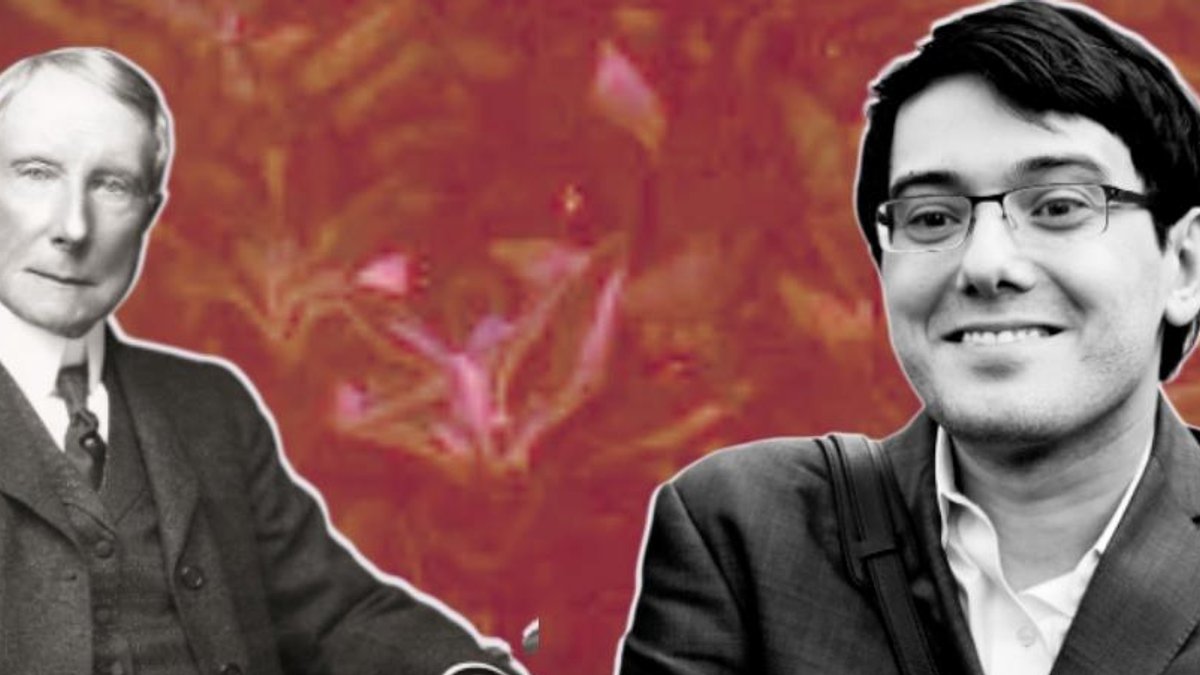
John D. Rockefeller and Martin Shkreli lived a century apart, yet both faced extreme public scorn from the press. The language used against them often crossed into outright disgust.
Rockefeller, who built Standard Oil, was labeled a “living mummy,” “reptilian,” and “diseased” in a 1905 exposé by journalist Ida Tarbell. The series, published in McClure’s Magazine, portrayed him as evil incarnate, his nervous habits proof of a guilty conscience. Ron Chernow’s 1998 biography Titan argued that Tarbell’s work was less journalism than personal revenge. Her father, an independent oil refiner, had been ruined by Rockefeller’s business tactics, rejecting his stock offers while others profited.
Shkreli, the former pharmaceutical executive convicted of securities fraud in 2017, faced similar treatment. Both men became symbols of corporate greed, though their actions had vastly different scales. Rockefeller reshaped an industry, while Shkreli’s offenses—raising the price of a lifesaving drug, taunting reporters, and defying legal norms—were more limited. The backlash against him often felt exaggerated compared to the actual harm.
Related: Bumble founder benefited from Tinder exit
The grudge behind the prose
Tarbell’s series on Rockefeller became a sensation, blending thorough reporting with deep-seated loathing. She called his business methods “sneaky and coercive,” but her real anger was directed at the man himself. Chernow noted she saw in Rockefeller “concentration, craftiness, cruelty and something indefinably repulsive.” Her words didn’t just criticize—they stripped him of humanity.
Shkreli never encountered a journalist with such a personal vendetta. Still, headlines described him in similarly harsh terms—“repulsive,” “hideous,” and phrases like “human mysterious mattress stain.” The difference was that many of Shkreli’s critics seemed to be performing outrage rather than documenting it.
Christie Smythe, who covered Shkreli and later wrote about their relationship, saw this firsthand. She recalled that some journalists she knew mostly towed company lines when they crafted their searing descriptions of Martin, and didn’t really believe he was “that bad” themselves. One New York Post reporter, she noted, had written harshly about Shkreli—only to later confess she didn’t truly believe he was “that bad.”
Related: Blocked Users Receive Apology Notice
Around the same time, cancel culture was gaining traction, and Shkreli was grouped with figures like Harvey Weinstein. The comparison was unfair. Weinstein’s crimes were systemic and violent; Shkreli’s were, at worst, irritating. Yet the media’s treatment of him revealed a deeper pattern: a need for villains, even when the facts didn’t support the outrage.
In the end, the similarities between Rockefeller and Shkreli say more about the press than the men themselves. Both were convenient targets, their flaws exaggerated into monstrosity. Rockefeller’s legacy was large enough to outlast the caricature. Shkreli’s never had a chance.
Journalists often rely on strong networks to shape public perception, but in these cases, bias overshadowed fair reporting.

Bumble founder benefited from Tinder exit


